
The most interesting thing about GPT-5.6 right now is not that it is officially here. It is that the market is already reacting before the product has fully landed.
What we are looking at is not one neat, stable release. It is a wave of signals:
internal checkpoint names keep surfacing
frontend and UI generation seem to be improving
some people think it can answer Mythos, others are far less convinced
the final outcome may depend as much on timing, price, and stability as on raw capability
If I had to summarize the current state in one sentence, it would be this:
GPT-5.6 feels like a flagship model that has already turned the engine on, but has not fully pulled out of the garage yet.
Why GPT-5.6 suddenly matters so much
The timing is doing a lot of work here.
Anthropic just pushed the conversation forward with Fable 5 and Mythos 5. Almost immediately, attention swung toward OpenAI and what it might have ready in response.
And this is not just a benchmark race anymore. Frontier models are now competing across a more practical stack:
reasoning
coding
agentic workflows
frontend generation
UI completion quality
real delivery experience
That means models are increasingly being judged by one question: can they enter real production workflows in a meaningful way?
First, the obvious caveat: GPT-5.6 still was not officially announced
This has to remain clear.
At this stage, much of the GPT-5.6 discussion still belongs to the world of:
internal checkpoint codenames
community probe testing
leaked screenshots
rumor-cycle interpretation
temporary public signals
That does not make the discussion useless. Early leak cycles often reveal real direction. But it does mean one thing:
signals are not the same as a finalized product.
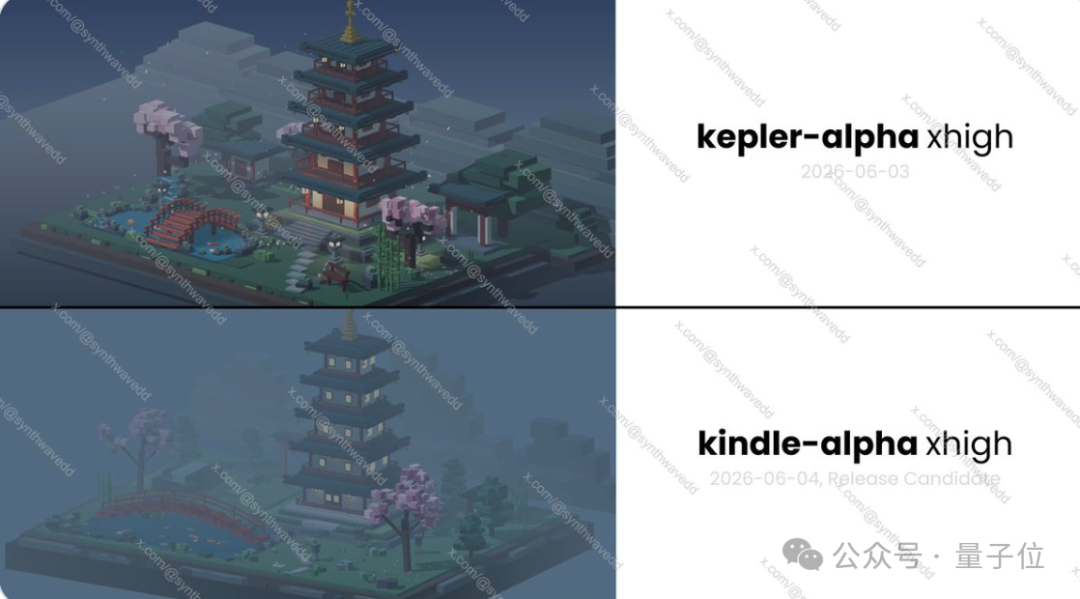
The strongest recurring signal: frontend and UI generation look better
If one theme keeps coming back, it is this:
GPT-5.6 may be getting meaningfully better at frontend and UI generation.
That matters because many models can generate code without generating product-feeling interfaces. A lot of them can create a page, but struggle with:
hierarchy
layout rhythm
interface clarity
visual order
presentation quality
So when a new version starts producing stronger UI without needing excessive prompt rescue, people notice very quickly.
But the version story still looks unstable
This is where the hype gets more complicated.
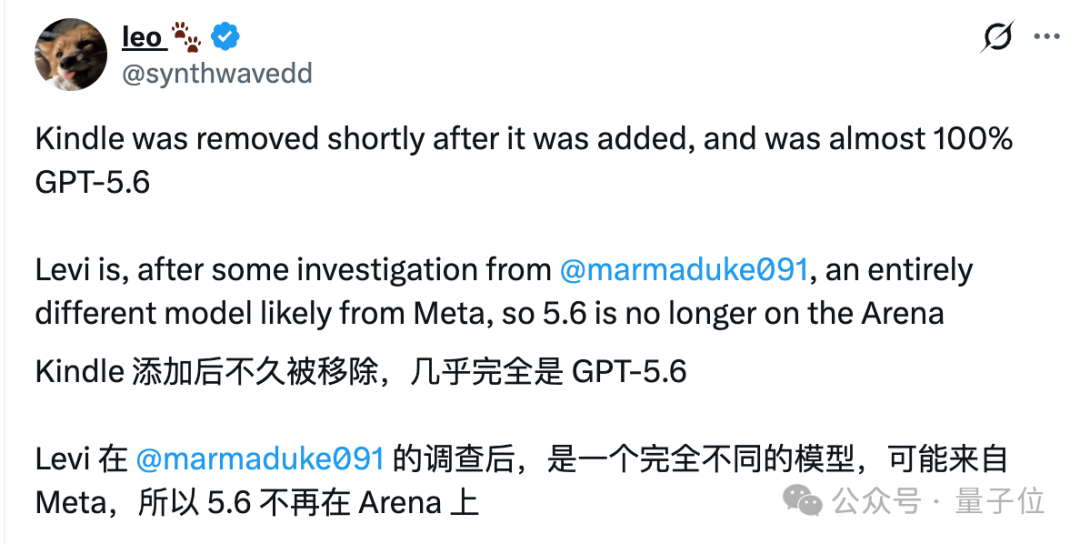
If GPT-5.6 were already a clean win story, it would actually be less interesting. Instead, the discussion is messy. Some users praise kindle-alpha, while others say kindle may have regressed compared with kepler.
That usually points to a classic pre-release pattern:
multiple checkpoints are still in contention
some versions shine in narrow areas
overall balance may still be unresolved
the final release candidate may not be locked yet
So “GPT-5.6” currently feels less like one fixed model and more like a moving set of internal candidates.

Levi made the picture even foggier
Then Levi showed up and made the rumor cycle even noisier.
Naturally, people jumped in two directions:
Levi might be another GPT-5.6-related internal label.
Levi might not be OpenAI at all. It could belong to another lab, possibly Meta.
That is exactly how leak cycles get messy. They reveal momentum early, but they also make it easy to confuse resemblance with confirmation.
So the best reading is simple:
treat Levi as a signal, not as a final answer.
Can GPT-5.6 really challenge Mythos?
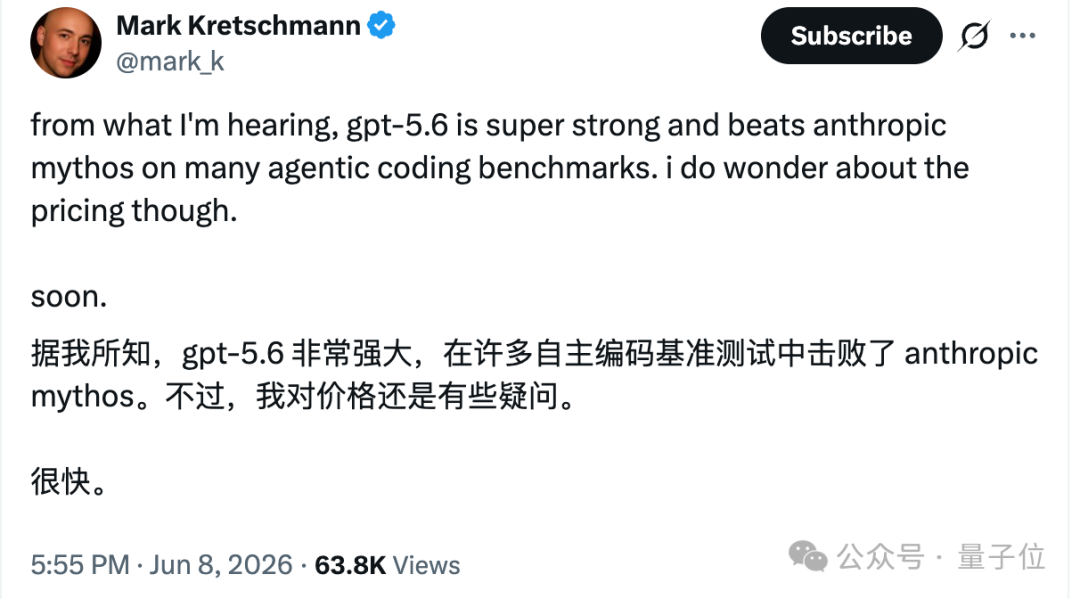
That is the headline question, but the honest answer is still cautious.
At this point, the strongest conclusion is not that GPT-5.6 has already beaten Mythos, or that it definitely cannot. The stronger conclusion is this:
Mythos has already become strong enough that the market is automatically placing GPT-5.6 into a direct competitive frame.
That alone tells you how serious the pressure is.
The real outcome may depend on more than raw model strength
People love to talk about which model is smarter. Teams usually ask more practical questions:
which one ships first
which one is stable enough to trust
which one is affordable enough to use at scale
which one fits into an existing workflow
which one produces stronger default outputs
That is why this GPT-5.6 moment matters beyond the leak itself. Adoption rarely goes only to the model with the loudest headline. It often goes to the one with the best mix of:
timing
pricing
reliability
workflow fit
Why this matters for We0 AI
There is also a more practical product angle here.
If GPT-5.6 really is better at frontend and UI generation, then the bigger opportunity is not just interface creation. The bigger opportunity is what happens next.
Can those model outputs become:
showcase websites
product pages
case-study assets
search entry points
lead-generation surfaces
That is the chain We0 AI is built around:
Build -> Showcase -> Grow -> Leads
So regardless of whether GPT-5.6 or Mythos ends up stronger, the teams that benefit most may be the ones that know how to turn model output into long-term business assets.
A practical framework for teams
Dimension | What the current wave suggests | A better practical reading |
Official status | GPT-5.6 is still unannounced | Do not treat leak-stage behavior as a final spec |
Frontend / UI generation | Many testers see clear promise | Measure consistency, not just standout screenshots |
Version maturity | kepler, kindle, and Levi suggest ongoing movement | More names often mean more pre-release uncertainty |
Mythos comparison | There are both bullish and bearish claims | Wait for stable, public, repeatable comparisons |
Business usefulness | Stronger models do not automatically win workflows | Pricing, stability, and integration still matter |
FAQs
Has GPT-5.6 been officially released?
No. At this point it was still being discussed through leaks, candidate checkpoints, screenshots, and community testing rather than official OpenAI release materials.
What are kepler, kindle, and Levi?
They appear to be internal checkpoint names, candidate labels, or related test identifiers. But not every name has been clearly confirmed as part of the final GPT-5.6 line.
What is the most interesting capability signal so far?
The clearest recurring signal is still frontend and UI generation. But this kind of strength needs consistency before anyone should treat it as settled.
Can GPT-5.6 really beat Mythos?
It is more accurate to say that GPT-5.6 is already being framed as a direct answer to Mythos, but it is still too early to declare a final winner.
Conclusion
What matters most in this GPT-5.6 wave is not one or two exciting screenshots. What matters is that OpenAI appears to be pushing toward a model release centered on stronger frontend generation, stronger workflow usefulness, and a more direct answer to the current frontier competition.
At the same time, the discipline matters too:
leak heat is not product reality.
So the mature reading is straightforward:
keep watching GPT-5.6 closely
keep watching how Mythos lands in real use
keep pricing, stability, timing, and workflow fit in the same frame as raw capability
do not let the entire conversation collapse into a single “who won” headline
Ready to Build?
As models get better at generating interfaces, product pages, and early product surfaces, the next valuable move is not generation alone. It is turning those outputs into showcase websites, searchable assets, and customer acquisition surfaces.
That is where We0 AI fits.
We0.ai helps founders, creators, consultants, agencies, and businesses build showcase websites that attract customers.
We0 AI: https://we0.ai
Positioning: AI Showcase Website Growth Platform
Path: Build -> Showcase -> Grow -> Leads