
A Real-World Shift: A One-Person Company Suddenly Doesn’t Feel So Fantastical
If you’ve been following topics like OPC, AI Solopreneur, indie developers, and super individuals over the past couple of years, you’ve probably had a very clear feeling:
Building a company by yourself suddenly doesn’t feel so far away anymore.
In the past, when people talked about a “one-person company,” many people’s first reaction was that it sounded more like a slogan.
It sounded free, lightweight, and idealistic, but once you really thought it through, you would quickly get stuck on one question:
Can one person really do that much?
In the past, that doubt was actually very reasonable.
Because many things used to genuinely require a team to divide the work. Content, product, design, operations, distribution, customer support, sales—even if you only built a basic version of each part, it was already enough to overwhelm one person.
But now, things really are different from before.
Not because people suddenly became stronger,
but because an entirely new layer of tooling infrastructure has gradually emerged.
AI tools, automated workflows, SaaS products, template-based systems—put together, these things have for the first time made it possible for one person to get many things running that previously required collaboration among multiple people.
You can write content alone,
build a product alone,
set up a website alone,
handle distribution alone,
and build the most basic business loop by yourself.
That’s also why the terms OPC and AI Solopreneur are being discussed more and more frequently.
Whether you understand OPC as One-Person Company, or as a lighter, more flexible AI-driven way of running a business, what it points to is essentially the same thing:
For the first time, one person truly has the possibility of operating like a company.
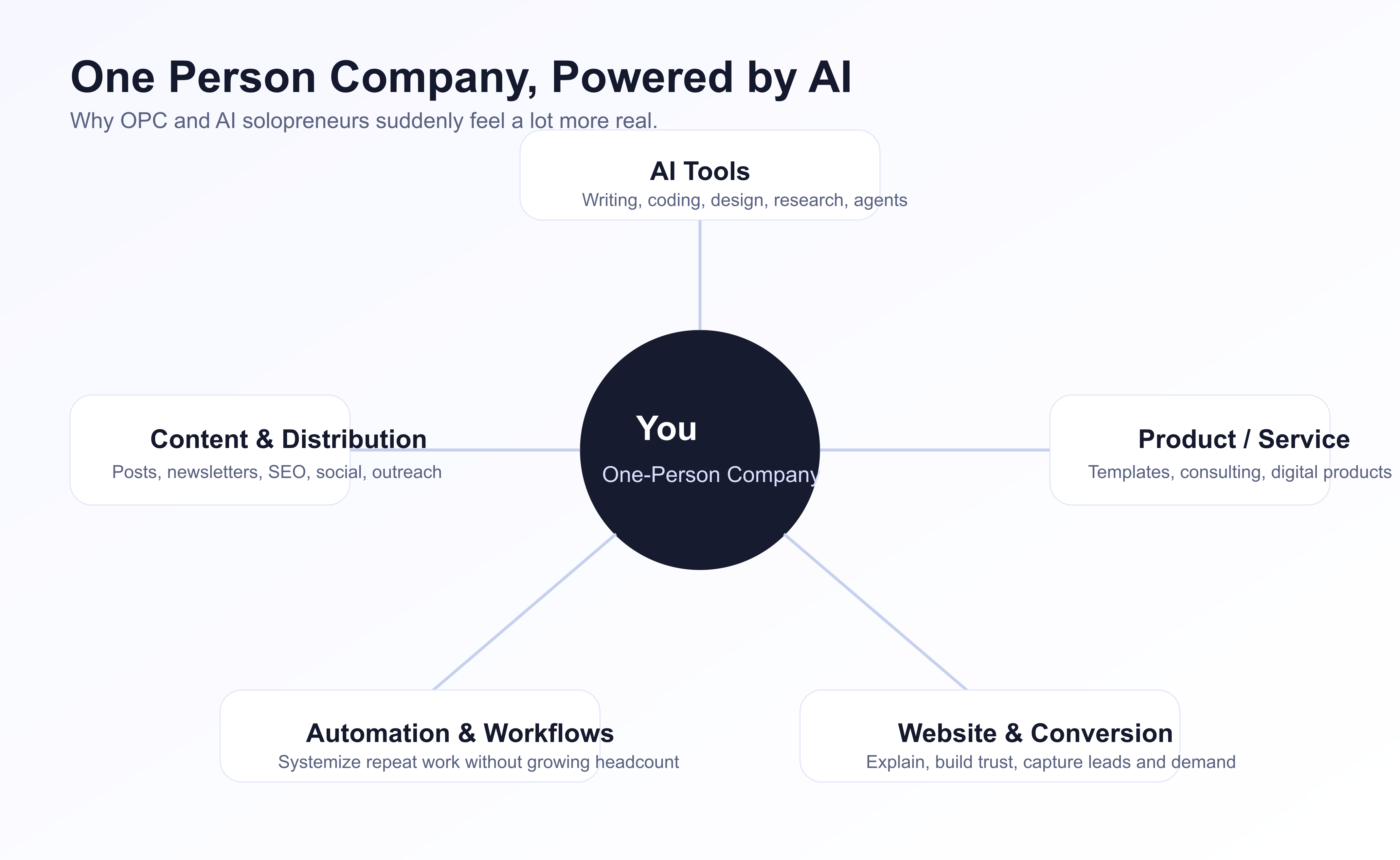
Figure 1: One person can do more than before, but they also need a stable home base to connect these capabilities.
Why Personal Websites Are Becoming Important Again Right Now
But precisely because of this, another question becomes even more important.
If you are the company, how exactly do you make yourself clear?
At this point, personal websites have become important again.
And not in the “it’s nice to have one” sense,
but in the sense that you really should have a site of your own.
Because one of the biggest practical problems for one-person companies and AI Solopreneurs is:
You don’t have a natural organizational shell.
You are not a big company.
You don’t have many team introductions.
You don’t have complex brand assets.
Nor do you have layers upon layers of organizational structure automatically creating a “looks legitimate” impression for you.
Most of the time, when others first encounter you, what they encounter is not a “company,” but you as a person.
Your product, your service, your content, your work, your professionalism, and your credibility are basically all tied together.
You could even say that other people’s judgment of you as a person is often their first judgment of your entire business.
At this point, how you present yourself on the internet becomes especially critical.
And a personal website is precisely one of the most underestimated parts of this.
It’s Not That Personal Websites Are No Longer Important; They’ve Always Been Misunderstood
In the past, many people felt that personal websites were a bit old school.
With social media, platform profiles, and all kinds of third-party page builders, websites seemed less necessary.
But looking back over the past few years, I’ve increasingly felt that:
It’s not that personal websites are no longer important; they have been misunderstood for a long time.
Many people still think of a personal website as a static business card page.
Add an avatar, write a short bio, list a few links, and that’s it.
But in the context of OPCs and AI Solopreneurs, a personal website has long been much more than just a “business card page.”
It is more like your:
Official Source of Expression
Personal brand homepage
Product and service showcase page
Trust-building page
Search landing page
Collaboration Entry Point
Long-term digital asset
Any one of these, taken on its own, is actually very important.
But in the context of “running a one-person business,” they become even more important.
Because the biggest problem for a one-person company is often not a lack of ability.
On the contrary, it is that other people cannot understand what you actually are.
Are you a developer?
A consultant?
A creator?
A designer?
A product person?
A service provider?
Or a hybrid of all these identities?
The real state of many AI Solopreneurs is not “a single role,” but rather “a combination of capabilities.”
This is originally an advantage.
But if you don’t have one place to organize all of these things clearly, it can easily become a barrier to understanding.
People may feel that you can do a bit of everything.
But they won’t know what you are fundamentally selling.
Nor will they know who you are best suited for.
And even less will they know what to do next after reading about you: how to contact you, buy from you, or collaborate with you.
This is why personal websites have become valuable again today.
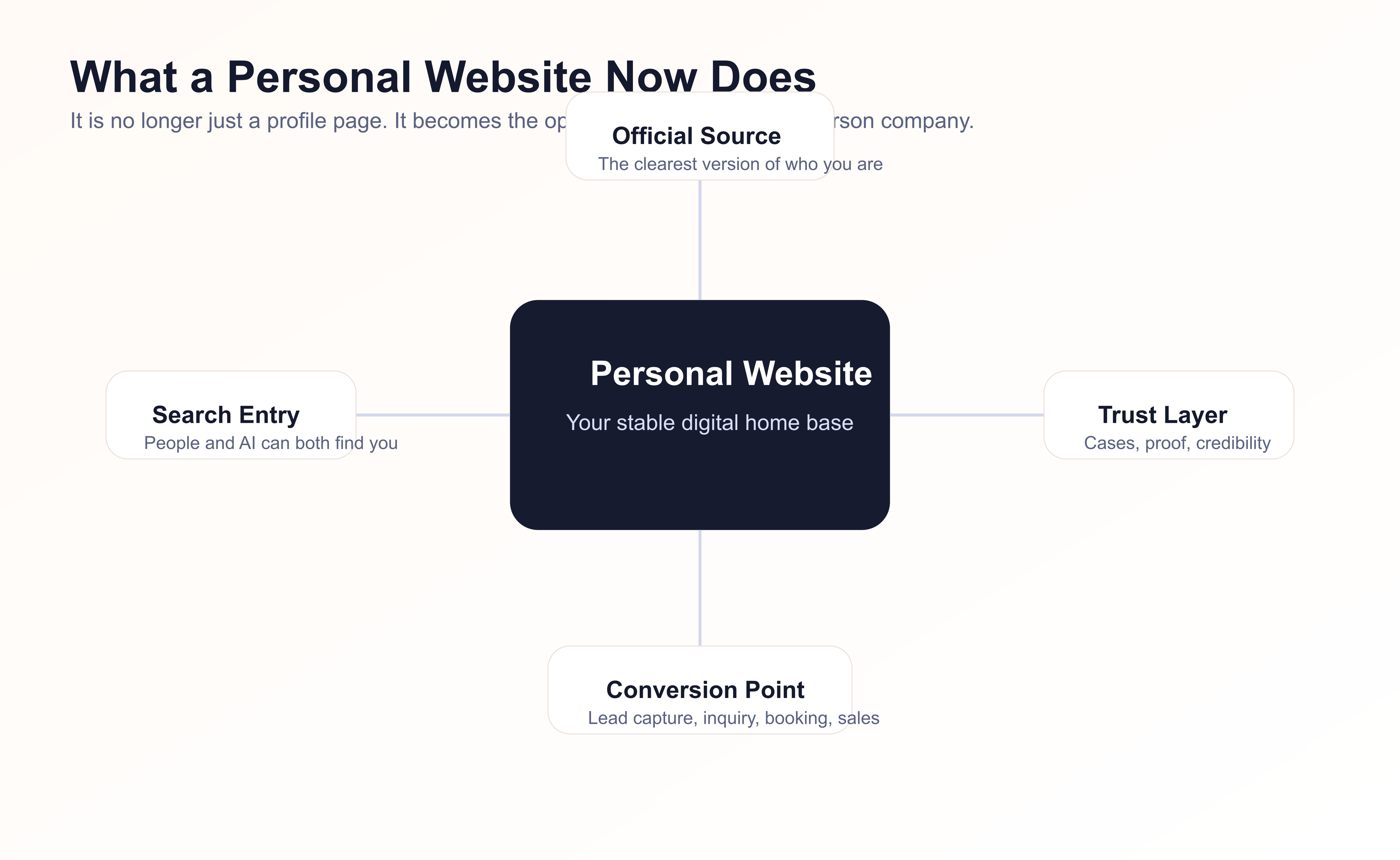
Figure 2: In the context of a one-person company, a personal website is not a résumé page, but an integrated entry point for expression, search, trust, and conversion.
Social media can help people see you first, but only a website can help them truly understand you
Because it is one of the few places where you can reorganize your capabilities, identity, products, services, content, cases, and sense of trust into a complete narrative.
This is something social media can hardly replace.
Platform pages can hardly replace it either.
Social media is good for helping people see you first.
Platforms are good for letting people browse you quickly.
But what truly helps people understand you systematically, evaluate you, decide whether they are willing to trust you, and determine whether they want to continue engaging with you is, in many cases, still your own website.
And today, as AI search becomes increasingly powerful, this value is actually being amplified even further.
Because in the future, many people may not encounter you by scrolling first,
but by searching first.
Or more accurately, by being “seen” by AI search systems first.
At that point, the importance of a personal website is no longer just about “being seen by people.”
It also becomes a stable source for AI to read.
If your website has a clear structure, explicit messaging, and well-organized pages, AI will more easily understand who you are, what you do, and who you are best suited for.
But if all your content is scattered across social media, comment sections, third-party platforms, and different tool pages, then your external presence becomes fragmented.
People will experience you as fragmented.
AI will understand you in a fragmented way as well.
And fragmentation is precisely what a one-person company fears most.
Because you do not have a large organization backing you up in the first place.
If your expression is also scattered, it becomes even harder for others to quickly form a clear judgment.
In an era where everyone can do something, “explaining yourself clearly” has actually become harder
This is also why I feel that in the era of OPCs and AI Solopreneurs, personal websites have become important again not because everyone suddenly became nostalgic, but because:
The more capable a person is of independently making things happen, the more they need a stable digital home base.
You need to have one place where you can truly establish yourself as a company.
Not just to tell others “what I’m doing,”
but to tell them:
who I am,
what problem I solve,
What work and case studies I have,
what value I can provide,
and, if you’re willing to continue, where to go next.
Simply put, this is the job a website is supposed to do.
It’s just that in the past, many people didn’t take it seriously.
Today, however, this is becoming something you can no longer fake your way through.
There is also a very practical reason.
The business models of one-person companies and AI Solopreneurs often don’t depend especially heavily on “large team scale,” but they do depend heavily on trust efficiency and conversion efficiency.
You don’t have a huge brand budget,
you don’t have a large sales team,
and you don’t have that many offline relationships,
so you need even more a place that can speak for you, screen clients for you, capture traffic for you, and build the first round of trust on your behalf.
And a personal website is often exactly that place.
It won’t necessarily make you impressive overnight.
But it can ensure that the capabilities you already have are not diminished by poor external expression.
To put it even more directly:
In the AI era, it has become easier for one person to run a company.
But for one person to explain themselves clearly has not automatically become easier.
In fact, in some ways, it has become harder.
Because now everyone can do many things.
Everyone can publish content.
Everyone can build a product.
Everyone can call themselves a founder, builder, creator, or consultant.
The more this happens, the rarer a clear, credible, and systematic personal website becomes.
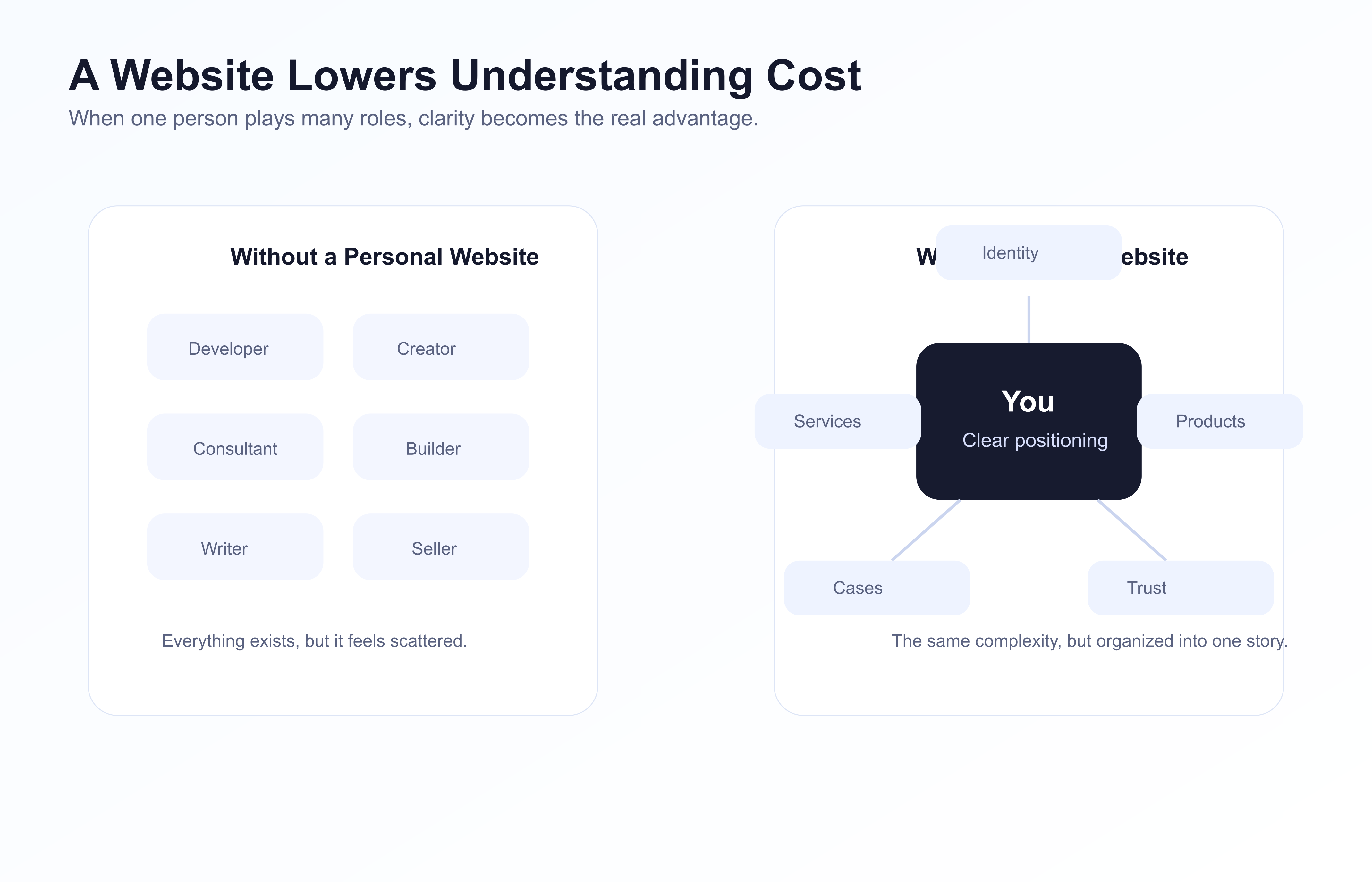
Figure 3: When one person takes on many roles at the same time, one of the most important functions of a website is to reorganize those roles into a story that others can understand.
FAQs
What exactly do OPC and AI Solopreneur mean?
OPC usually stands for One-Person Company. An AI Solopreneur is someone who uses AI tools, automation, and SaaS systems to run a business independently with lower labor costs.
Why does an AI Solopreneur still need a personal website?
Because social media and platform pages are better for being discovered, while a personal website is better for expressing yourself systematically, building trust, capturing search traffic, and converting collaboration opportunities.
What is the biggest difference between a personal website and a social media profile?
A social media profile is better for fast distribution and reach, while a personal website is better for fully presenting your identity, capabilities, services, case studies, and long-term value.
What kind of personal website is more suitable for a one-person company?
A website with a clear structure, clear positioning, case studies, service descriptions, FAQs, and the ability to help people quickly understand “who you are, what problems you can solve, and what to do next” is more suitable for a one-person company.
Will personal websites be replaced by platforms in the AI era?
Not in the short term. Platforms can bring traffic, but a personal website remains one of the few digital assets that truly belongs to you and can accumulate value over the long term.
Conclusion
So if you ask:
Why have personal websites become important again in the era of one-person companies, OPCs, and AI Solopreneurs?
My answer would be:
Because one person can now do more things,
but the cost for others to understand you has also increased.
And a personal website is the place that helps you reduce the cost of understanding, improve trust efficiency, capture search traffic, and build long-term assets.
It is not an add-on.
It is becoming infrastructure again.
What will truly be valuable in the future may not only be “whether you can get things done on your own.”
It will also include:
Do you have a place where who you are, what you do, and the value you can provide are built up consistently?
From this perspective, it is no accident that personal websites are becoming important again.
They are, in fact, a natural part of the OPC and AI Solopreneur era.
Ready to Build?
If you have already started building a one-person company, personal brand, independent product, or consulting service, or if you are on the path toward becoming an AI Solopreneur, what you may truly need is not just to publish a few more pieces of content, but to first build your own digital home base.
This is also the problem We0.ai wants to solve.
We0.ai is not just here to help you “build a web page.”
It aims to help you go through the entire journey:
Build -> Showcase -> Grow -> Leads
In other words:
Build a website -> showcase products/services/case studies/portfolio work -> gain traffic from search and AI recommendations -> convert it into leads and customers
If you need a showcase website better suited to a personal brand, one-person company, consultant, creator, or independent product, what We0.ai really wants to do is: help you not only get your site built, but make it truly start speaking for you and bringing in customers on your behalf.
Related Tools
ChatGPT: suitable for brainstorming, writing assistance, research organization, and basic content creation
Claude: suitable for organizing long-form text, structuring ideas, and refining expression in greater detail
Cursor: suitable for individual developers and technical solopreneurs looking to improve development efficiency
Replit: suitable for quickly turning ideas into runnable product prototypes
Notion: suitable for organizing a personal knowledge base, service descriptions, and workflows
We0.ai: better suited to truly organizing a personal brand, products, services, and case studies into a showcase website that can be displayed, grow, and capture customers
Sources
[OpenAI ChatGPT FAQ](https://help.openai.com/en/articles/12677804-what-is-chatgpt-faq)
[Anthropic Claude](https://www.anthropic.com/claude)
[Cursor](https://www.cursor.com/)
[Replit AI docs](https://docs.replit.com/programming-ide/ai-features)
[Replit: Create with AI](https://docs.replit.com/replitai/edit-code)